Is It Safe to Travel to Spain in Fall 2026?
Yes. As of August 24, 2026, the July wildfires near Madrid are fully contained and air quality in the city has returned to normal levels. The IGN is still monitoring the earthquake swarm near Granada, but it hasn't disrupted travel to the region — the Alhambra has reopened with modified visitor routes; the Alcazaba remains closed for safety reasons, and Madrid, Toledo, Segovia, and Sevilla are all operating normally. These are two separate events in two different parts of the country, and neither is a reason to change your plans this fall.
You're probably here because of the headlines from this summer — wildfires burning near Madrid in July, then a run of earthquakes shaking Granada in August. Here's the full picture.
It's been an unusual summer in España otherwise. We won the World Cup this year — a second star on the "La Roja" shirt — and a total solar eclipse crossed the country in August. Both were genuinely wonderful, even while parts of the country were dealing with something much harder. I track all of this closely for the people I work with — not just the headlines, but what's actually true on the ground right now.
"Please tell me you and the boys are okay — I've been thinking about you since I saw the news."
Everyone is fine. Here's what's actually going on, in detail.
The Fires Near Madrid
In July, a wildfire spreading across the Madrid, Ávila, and Toledo provinces grew into the largest fire in Spain's recorded history, burning more than 60,000 hectares. The government declared a national emergency and lifted it by the end of July — the fire is now fully contained, with crews finishing the last hot spots. Air quality in Madrid spiked during the worst of it, then returned to normal levels and has remained there for weeks.
It was a difficult season elsewhere in Spain too, including a serious fire in Almería earlier in the summer.
Granada, the Earthquakes, and the Alhambra
Starting August 14, a seismic swarm hit the area just south of Granada — around Alhendín, Gójar, and La Zubia. Spain's Instituto Geográfico Nacional (IGN), the government agency responsible for seismic monitoring nationwide, has logged more than 600 tremors in the sequence, including two magnitude 4.8 earthquakes on August 15 and August 18. The stronger quakes caused some minor, non-structural damage in the area — cracked walls, falling debris — and authorities evacuated around 600 residents in the nearby town of Las Gabias as a precaution.
The Alhambra itself closed briefly after each of the two strongest quakes while inspectors checked the site. Officials found no significant structural damage and no risk of collapse. Per the official Patronato de la Alhambra y Generalife, the monument is open during its usual hours, with some itinerary changes: the Alcazaba remains closed for safety reasons, visitors can tour the Nasrid Palaces on a special route, the Partal is open except for the Paseo de las Torres, and the Generalife is open on its normal route.
A few of the smaller Andalusí monuments in the city needed the same precaution. The Maristán, Bañuelo, and Corral de Carbón have since reopened after technical checks; only Casa Horno de Oro and Palacio de Dar al-Horra remain closed for now.
The swarm is ongoing but low-magnitude overall, and the IGN monitors this kind of activity in the region as a matter of course.
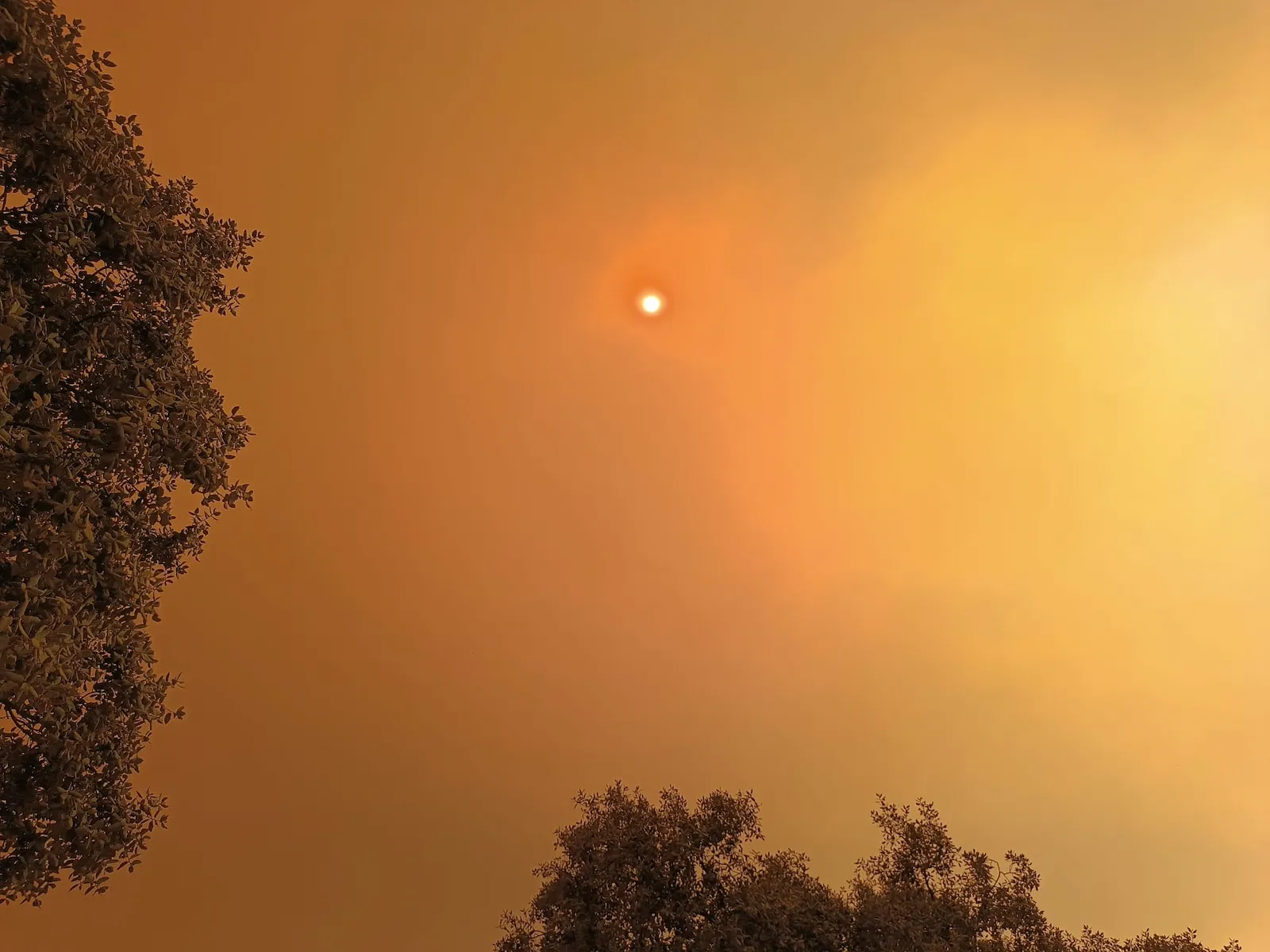
Not the eclipse — the sun through wildfire smoke over the Madrid Sierra, July 24, 2026. The fires stopped about 18 miles from home. No filters.
What This Means for Your Trip
- Madrid: normal tourism, clear air, no impact on walking tours or day trips.
- Granada: the Alhambra is open on a modified route; the Alcazaba remains closed for safety reasons.
- Toledo & Segovia: unaffected by either event, running as usual.
- Sevilla: unaffected, operating normally.
I check on all of this constantly for the people I work with, because a headline from three weeks ago and the situation on the ground today are often two very different things. Spain had a genuinely eventful summer — the best of it and the hardest of it — but none of it should be the reason you second-guess a trip this fall.
FAQs: Traveling to Spain This Fall
Is Madrid affected by the 2026 wildfires?
No. Crews brought the fires that burned through the Madrid, Ávila, and Toledo region in July under control by the end of the month, and air quality in the city has been back to normal for weeks.
Is Madrid's air quality safe for visitors this fall?
Yes. Air quality spiked during the worst of the wildfires in late July, but it has returned to normal levels and has remained there for weeks.
Is the Alhambra open after the Granada earthquakes?
Yes. Per the official Patronato de la Alhambra y Generalife, the monument is open during its usual hours. The Alcazaba is closed for safety reasons, but visitors can tour the Nasrid Palaces (special route), the Partal (except the Paseo de las Torres), and the Generalife (normal route).
Was the Alhambra damaged in the 2026 Granada earthquakes?
The Alhambra suffered no significant structural damage, and officials found no risk of collapse. The Alcazaba remains closed for safety reasons while checks continue. A few smaller Andalusí monuments in Granada saw the same temporary closures, and most have since reopened after technical inspections.
Should I change my trip to Andalucía because of the earthquakes?
There's no reason to. The seismic activity near Granada remains low-magnitude, and the IGN closely monitors it. It hasn't disrupted travel to the region.
Are Sevilla, Toledo, and Segovia affected?
No. Neither the wildfires nor the Granada earthquakes touched any of these cities, and all are operating normally for visitors.
Is it still safe to travel to Spain this fall?
Yes. Both situations — the wildfires and the earthquake activity — have eased significantly, and neither affects the areas most travelers visit. If you have concerns about a specific part of your itinerary, I'm happy to look at it directly.
Still worried about a specific city or date? Let's talk it through.
Book a Travel Consultation